Andrew Babjak
U.S. Army 82nd Airborne Division (January 20, 1924 – June 6, 1944)
Quick Facts
From Žbince to the Battlefields of D-Day
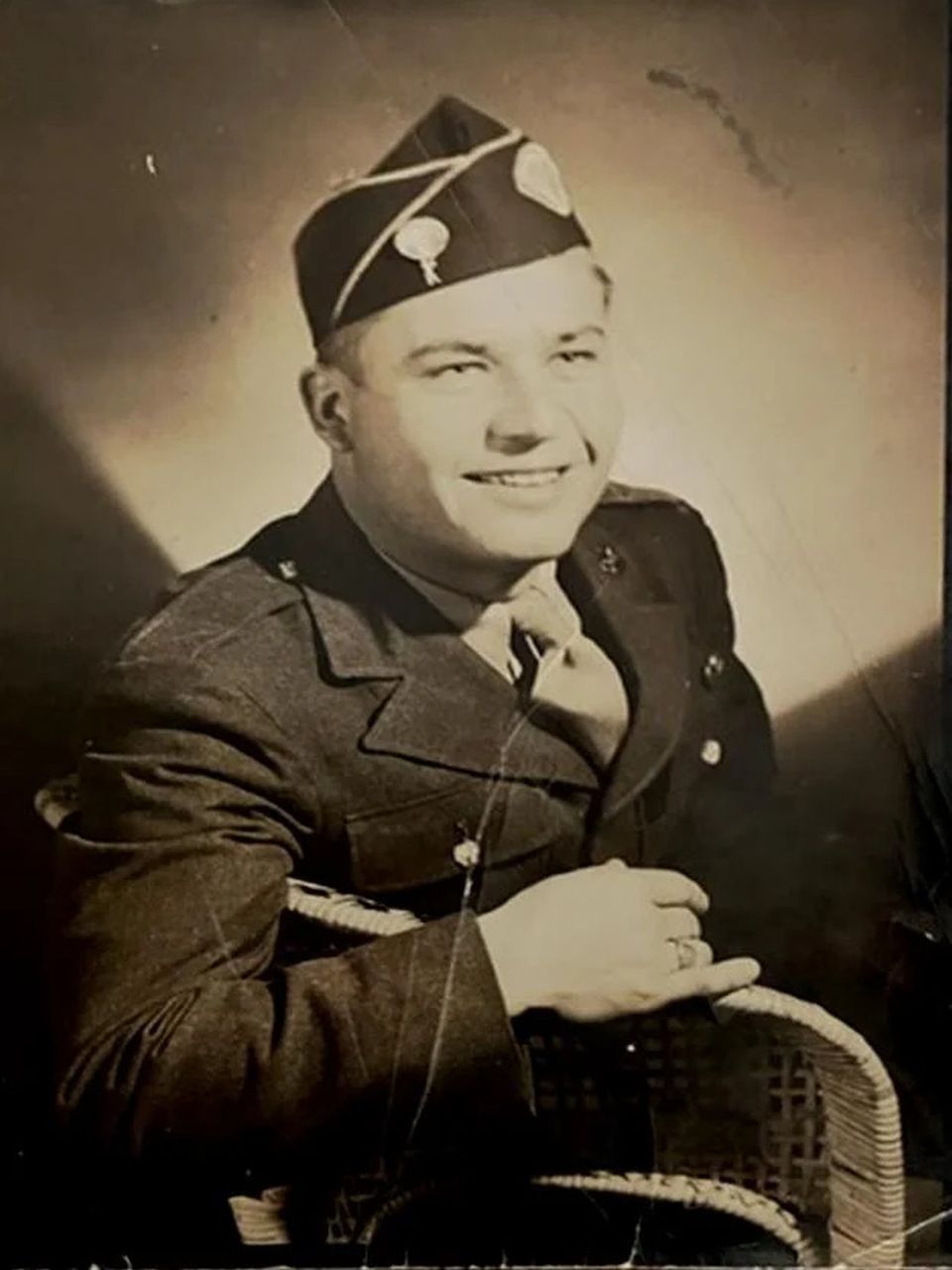
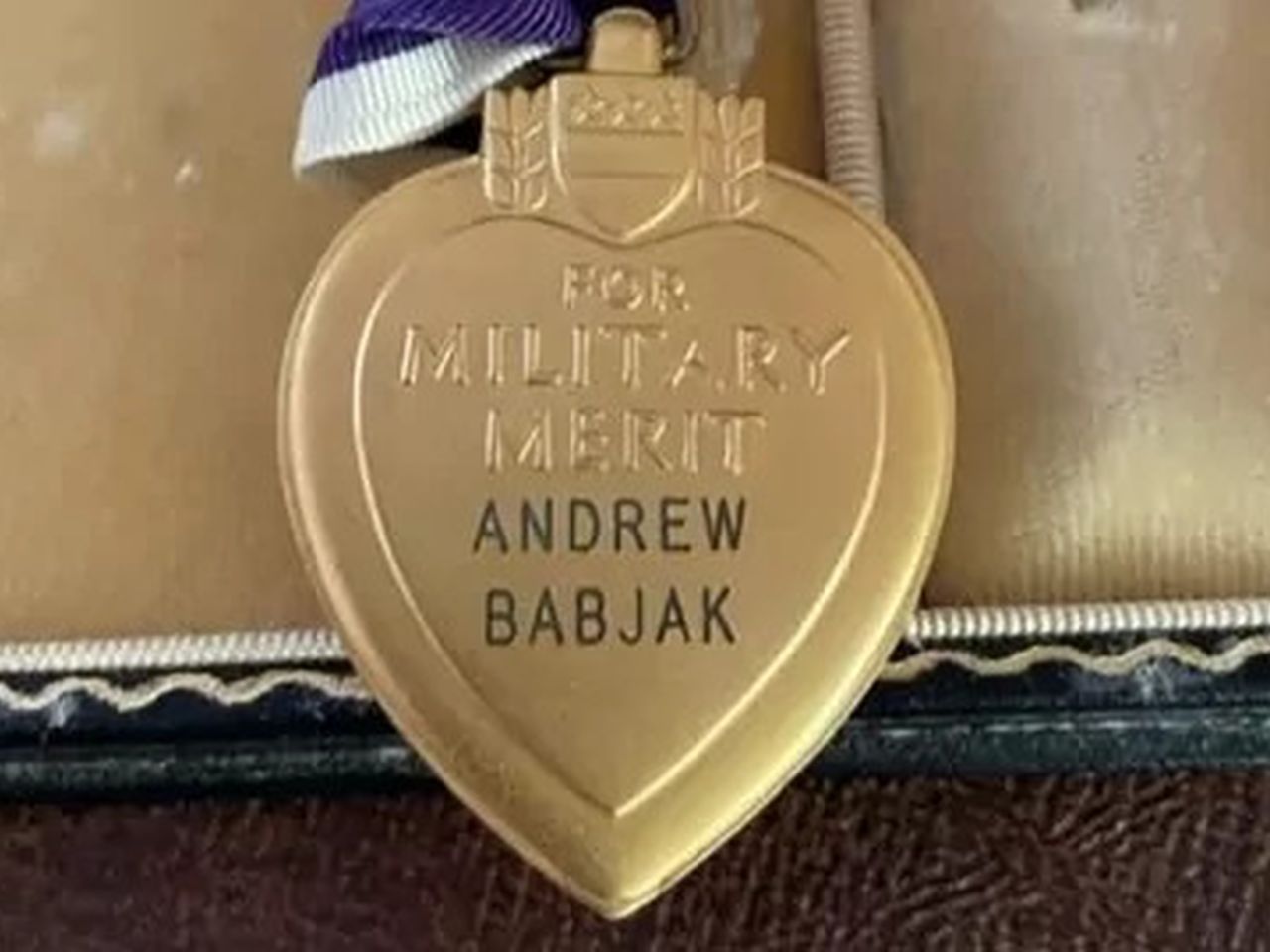
Andrew Babjak was born Andrej Babjak on January 20, 1924, in Veľké Žbince, now the village of Žbince in Michalovce District in eastern Slovakia. He was the elder of two sons born to Andrej Babjak and Mária Mitníková. His parents had already been living in the United States for some time, and in 1939 Andrew began his journey to join them. Seven days before Nazi Germany invaded Poland, travel documents were issued for him in Prague. On December 27, 1939, fifteen-year-old Andrew arrived in New York aboard the ocean liner Lancastria. He later reunited with his parents in Bridgeport, Connecticut. In June 1940, the Lancastria was sunk by German aircraft off the French coast, with thousands of people losing their lives.\ \ In Bridgeport, Andrew worked for the Frisbie Pie Company. He enlisted in the U.S. Army on May 15, 1943, and completed basic training at Camp Wheeler, Georgia. A few months later, he became a U.S. citizen and joined the 508th Parachute Infantry Regiment, part of the U.S. Army’s 82nd Airborne Division. In late December 1943, the regiment left New York for Europe. After training in Northern Ireland and England, its soldiers prepared for the Allied invasion of Normandy.\ \ During the night of June 5–6, 1944, Operation Neptune—the airborne phase of the Allied landings in Normandy, known as Operation Overlord—began. Andrew served in Headquarters Company, 1st Battalion, 508th Parachute Infantry Regiment. He was an ammunition bearer in a mortar platoon. He flew to France aboard a Douglas C-47-DL Skytrain identified as Chalk #3, assigned to the 47th Troop Carrier Squadron. The aircraft carried seventeen paratroopers in addition to its four-man crew. The jump was scheduled for 2:20 a.m. local time on June 6, 1944.\ \ The airborne operation was complicated by poor visibility, low cloud and German defences. Andrew Babjak did not survive the first morning of D-Day. He died on June 6, 1944, probably by drowning in the flooded Douve River basin on the Cotentin Peninsula. German forces had opened flood-control gates to inundate large areas and hinder the advance of Allied paratroopers. The water and marshy terrain posed a deadly danger to soldiers carrying heavy equipment. The exact place where Andrew died has not been established with certainty.\ \ His remains were buried on June 15, 1944, in a temporary military cemetery near Blosville, France. He was posthumously awarded the Purple Heart. In late 1947, his remains were moved to Normandy American Cemetery near Colleville-sur-Mer, where he rests today. According to the available research, Andrew Babjak was the only known member of the U.S. 82nd or 101st Airborne Divisions born in Slovakia to have been killed during the Allied landings in Normandy on D-Day itself. His story remembers a young man who left his native village at fifteen and, just a few years later, gave his life in the fight to liberate Europe.
About the Memorial
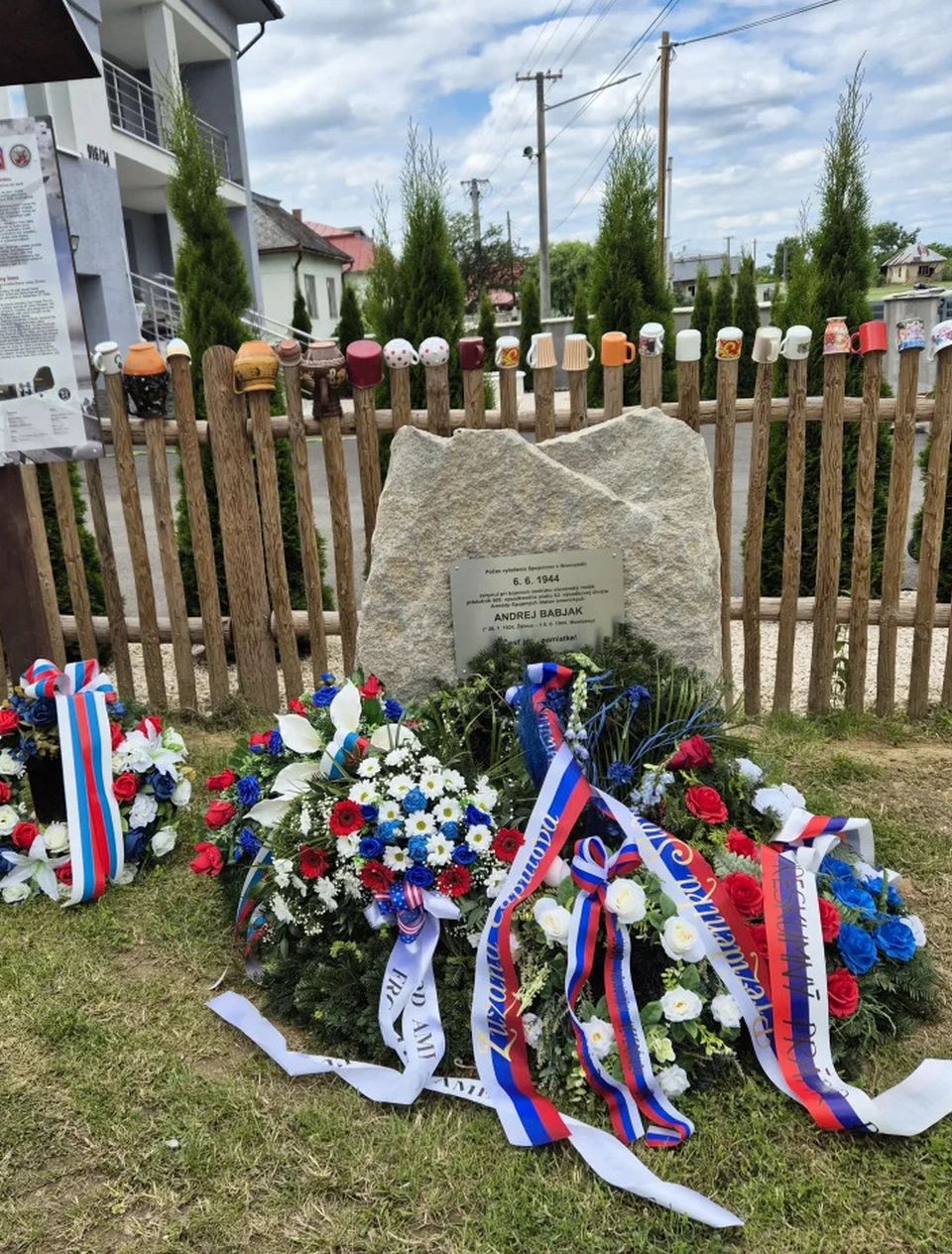
The Andrew Babjak memorial commemorates a native of Veľké Žbince who was killed on June 6, 1944, during the Allied landings in Normandy while serving with the U.S. Army’s 82nd Airborne Division. Babjak was a member of the 508th Parachute Infantry Regiment and took part in the airborne operation intended to support the Allied landings on the Normandy coast.\ \ Andrew Babjak’s story was brought to light again through historical research by Pavol Horňák, who came across his name while studying American military records. Further research uncovered details of Babjak’s family, his journey to the United States, his military service and the circumstances of his death. Important information and historical material were also provided by his relative, John M. Babjak, who lives in the United States.\ \ The memorial is located at the Museum of Emigration from Slovakia to North America – Kasigarda, in Ťahyňa, part of the municipality of Pavlovce nad Uhom. Its unveiling brought the story of a soldier whose life connected eastern Slovakia, the United States and one of the decisive operations of the Second World War to a wider public. The memorial also honours those who left Slovakia in search of a new life and ultimately took part in the fight against Nazism.
Memorial Unveiling
The Andrew Babjak memorial was officially unveiled on June 14, 2024, at the Museum of Emigration from Slovakia to North America – Kasigarda, in Ťahyňa, part of Pavlovce nad Uhom. The ceremony marked the 80th anniversary of his death and the Allied landings in Normandy.\ \ The memorial was initiated by Pavol Horňák, who researched Babjak’s life and military service. The commemorative event was attended by representatives of the museum and local authorities, guests from the United States, and members of the U.S. Army’s 82nd Airborne Division. The memorial honours Andrew Babjak, a Slovak-born soldier who died in the first hours of D-Day, and preserves his story for future generations.
Location
Photo Gallery